
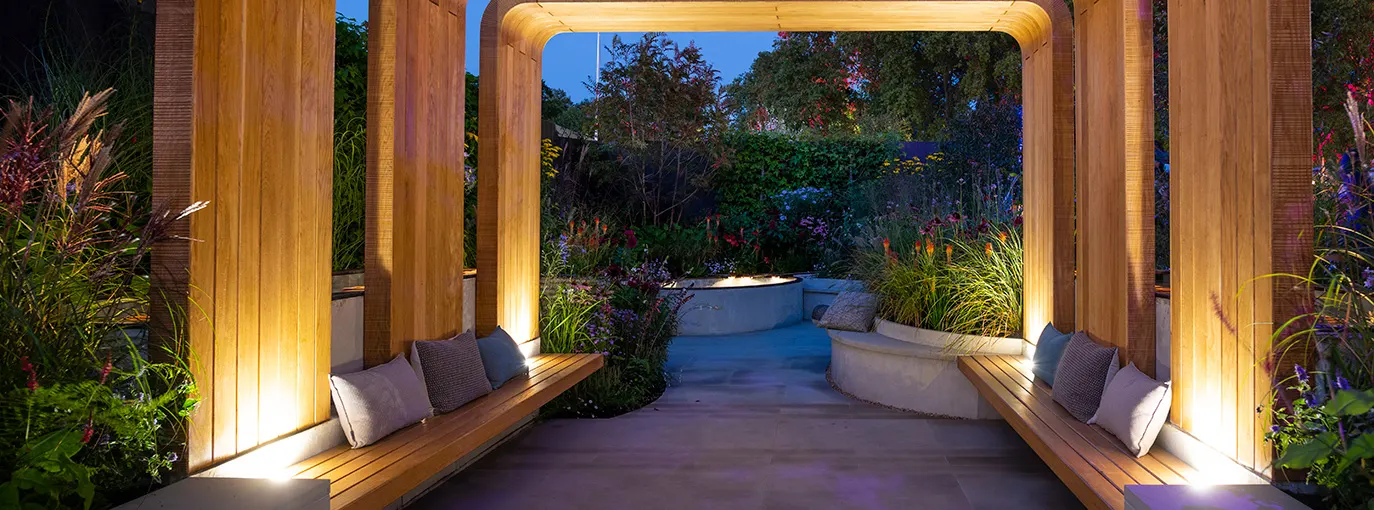
Therapeutic garden design
Gardens that support wellbeing, for care homes, mental health and learning disability settings, schools and community groups. Planting-led gardens by Naomi Ferrett-Cohen, RHS Chelsea Silver-Gilt.
01273 381512
Gardens that support wellbeing
A therapeutic garden is designed to help the people who use it feel calmer, safer and more connected. It gives them somewhere to sit, walk, spend time with others or simply be quiet, with planting that invites them to look, smell and touch.
Naomi Ferrett-Cohen designs therapeutic gardens for care homes, mental health settings, learning disability services, schools and community gardens. She spent time working in the care sector, supporting people with mental health problems and learning disabilities, before she trained as a garden designer. It is why she believes a garden can change how people feel.
Her gardens start with the people who will use the space. Naomi plans the layout, the seating and the planting around them, so the garden works for residents, pupils or patients, and for the staff and families who spend time there with them.
Settings Naomi designs for
Every setting has different needs, so each garden is planned around the people who will use it.
Care homes
Somewhere pleasant and easy to reach where residents can sit outside, and where visitors and staff can spend time with them.
Mental health settings
A calm, enclosed place to step outside, with planting that gives people something gentle to focus on through the seasons.
Learning disability services
A garden people can enjoy in their own way, with planting to see, smell and touch, and places to sit alone or together.
Schools
An outdoor space for pupils and staff, with planting that brings nature into the school day.
Community gardens
Shared gardens where people with mental health problems or learning difficulties can spend time outdoors together, with places to gather and places to be quiet.
Care home garden design
A care home garden is somewhere residents can step outside when they want to, and somewhere families and staff can spend time with them. Naomi designs care home gardens around the people who live there: paths and seating that everyone can use, planting to look at, smell and touch, shade and shelter, and quiet corners as well as places to gather.
She starts with the space you have, whether that is a courtyard, a lawn or an unused corner, and with who will use it.
A care home garden design works when people really use the garden. That depends on a few simple things: routes that are step-free and easy to follow, seating at regular intervals so nobody has far to go before resting, shade and shelter so the garden is comfortable on more days of the year, and something worth going outside for, such as scent, colour and texture through the seasons. Views from a window or a day room matter too, because for residents who cannot go out, the garden is still something to look at and enjoy.
What a therapeutic garden can include
Every garden is different, but these are the things Naomi thinks about when she plans one.
Sensory planting
Scent, texture and colour to look at, smell and touch, as in a sensory garden, chosen so something is always in flower or in leaf.
Places to sit
Seating for one person or for a group, so people can be alone or together, in sun or in shade.
Paths everyone can use
Routes through the garden that are easy to follow and easy to reach, so no one is left out.
Shelter and quiet
Shade, screening and planted corners that give a sense of enclosure and calm.
Wildlife
Planting that brings in birds, bees and butterflies, for people to watch and enjoy.
Interest through the year
Plants chosen for every season, so the garden still has something to offer in winter.
Nature at the heart of the garden
Planting is Naomi’s passion, and in a therapeutic garden it does most of the work. Time spent among plants and wildlife is good for people’s wellbeing, so she designs these gardens to look and feel as natural as possible, calm and part of the landscape.
She designs around the people first, then the layout, the seating and the planting. The same thinking runs through her hospital gardens.
Questions about therapeutic garden design
- What is a therapeutic garden?
- A garden designed to support the wellbeing of the people who use it. It gives them somewhere calm to sit, walk or spend time with others, with planting to look at, smell and touch.
- Who are therapeutic gardens for?
- Naomi designs them for care homes, mental health settings, learning disability services, schools and community gardens. Each garden is planned around the people who will use it.
- What can a therapeutic garden include?
- Sensory planting, seating for one person or for a group, shade and shelter, paths everyone can use, quiet corners and planting that brings in wildlife. Every garden is different, so Naomi starts with who the space is for.
- How is it different from a hospital garden?
- A hospital garden is designed for the patients, visitors and staff of a hospital. A therapeutic garden covers the wider settings where people live, learn and receive care, including community-led gardens. Naomi’s approach is the same: start with the people, then plan the garden around them. Hospital garden design →
- Can an unused corner or courtyard become a therapeutic garden?
- Yes. Naomi starts by looking at the space, how people will reach it and who will use it, whether it is a courtyard, a lawn or a forgotten corner.
- Will the garden look good through the year?
- That is how Naomi plans the planting. She chooses plants for every season, so the garden keeps giving as it matures.

Planning a garden for wellbeing?
Tell Naomi about the setting and the people who will use the garden. She reads every enquiry herself.
- RHS Chelsea Silver-Gilt
- London College of Garden Design